Practical garage cleanout tips that get results. The zone system, how to handle hazardous items, what to toss vs. keep, and when to call for help.
Estate Cleanout: The General Term
When most people say 'estate cleanout,' they mean clearing the household of a deceased family member. The timeline is loose, the work is emotional, and family members make the decisions. We have written about that work in our estate cleanout guide. This article is about the legal side, the difference between an estate cleanout and a probate cleanout, which matters when the property is moving through the Georgia probate court system.
Probate Cleanout: The Legal Framework
A probate cleanout happens AFTER probate court has been involved. In Georgia, probate is the legal process by which a deceased person's estate is administered. The executor (named in the will) or administrator (appointed if no will) has fiduciary responsibility to inventory the estate, settle debts, and distribute assets per the will or per Georgia intestacy law. Until probate is opened, the deceased's property cannot legally be disposed of beyond emergency necessity. The executor's letters testamentary or letters of administration give the legal authority to make decisions about the household contents.
Why Timing Matters
Without probate authority, you cannot legally have us haul away the contents of a deceased person's home. Family members sometimes call us before probate has been opened, planning to clear the house quickly. We always ask about the legal status. If probate is pending, we encourage families to wait until letters testamentary are issued (typically 4-8 weeks in Georgia depending on the county). If the estate is moving through 'no administration necessary' (a simplified Georgia probate path for small estates), the family has flexibility but should still document the contents before disposal.
Inventory Before Disposal
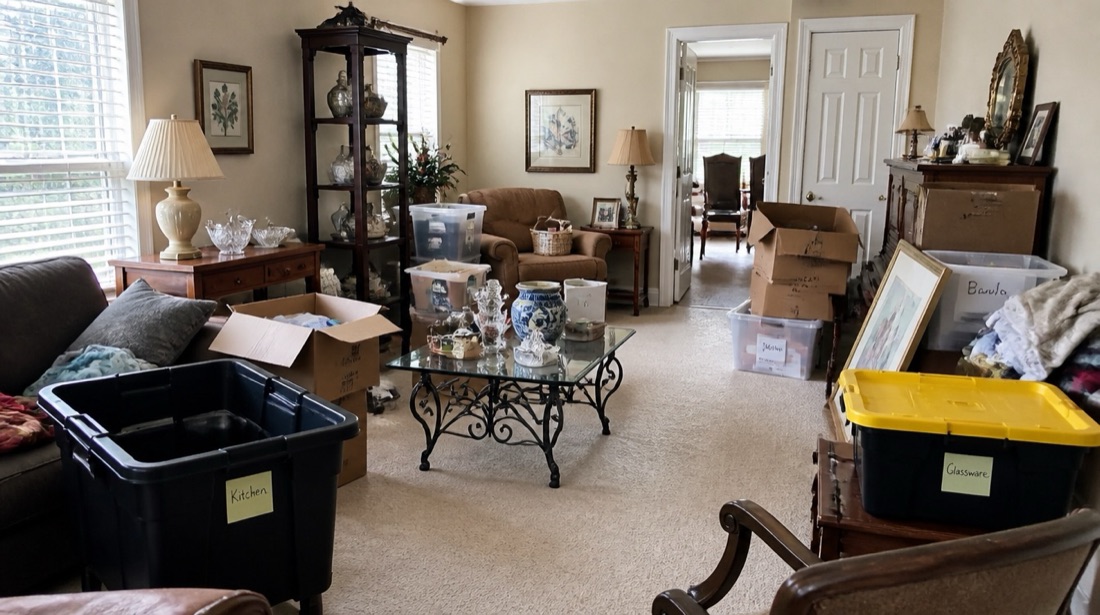
For probate cleanouts, the executor is responsible for an inventory of the estate's contents. Most executors handle this themselves with photos and a written list, but for larger estates an estate sale company or appraiser may walk through first. We typically work the cleanout AFTER the inventory is documented and after items of value (sentimental or appraised) have been distributed or moved. The cleanout is the last step, clearing what no one in the family wants and what cannot be sold or donated.
Working with Probate Attorneys
Atlanta-area probate attorneys regularly refer us to clients who need cleanout services. We coordinate with the attorney on documentation: photos before the work starts, photos after, an itemized list of any items of value that surfaced during cleanout. Some attorneys want a formal cleanout report. We provide what is needed.
Pricing and Process
Cleanout pricing is the same whether the work is estate or probate. The difference is on the documentation and access side. See our estate cleanouts service for the general service. For probate-specific coordination, mention it when you book and we route accordingly.
Frequently Asked Questions

Real Stories, Real Results
"Great service! I called them and needed them ASAP and they were able to come out immediately. The process was very easy . Will be using them in the future."
"The entire process was seamless and professional. From the initial and final time on the phone with Lavender to the drop off and pickup with JT."
"Professional and punctual service. Jaylen went out of his way to pick up my bulk removal early. He was very courteous and kind. 1000% recommend!"